Singapore Standards Council Drives International Framework Collaboration: New Work Item Launched on Digital Twin Method for Digital Qualification of Metal 3D Printed Components
Model-Based Qualification: Cost and Speed
In the additive manufacturing sector, what does it cost to complete a microstructure characterization—verifying the grain orientation, phase distribution, and their correlation with mechanical properties inside a metal component—via the traditional experimental path?
According to industry benchmarks disclosed at the ASTM ICAM Conference 2020: sample build costs approximately $1,000, sample preparation around $200, and EBSD/microscopy characterization another $200. Factoring in machine time, powder waste, and operator labor, a single complete characterization typically exceeds $1,400. To achieve statistical confidence, the same process must be repeated dozens of times; ten characterizations alone would total approximately $14,000.
What about the physics-based digital twin simulation path? Referencing the public pricing of an AWS EC2 m6g.12xlarge (48-core) cloud instance, eight hours of compute plus software licensing costs approximately $10 in computing power. The SynaCore AM-DT Digital Twin Pro version, amortized over an eight-hour run, costs about $4.45. Computing power plus software amortization totals roughly $14.45—a factor of nearly 1,000 compared to the cost of ten experimental characterizations.
This does not mean digital twins can fully replace experimental testing. However, it raises a question worth taking seriously: digital twins have already achieved economic feasibility for pre-qualification. Yet economic feasibility does not equal regulatory legitimacy. The latter requires not only computing power and algorithms, but also time, data, and consensus among standards bodies.
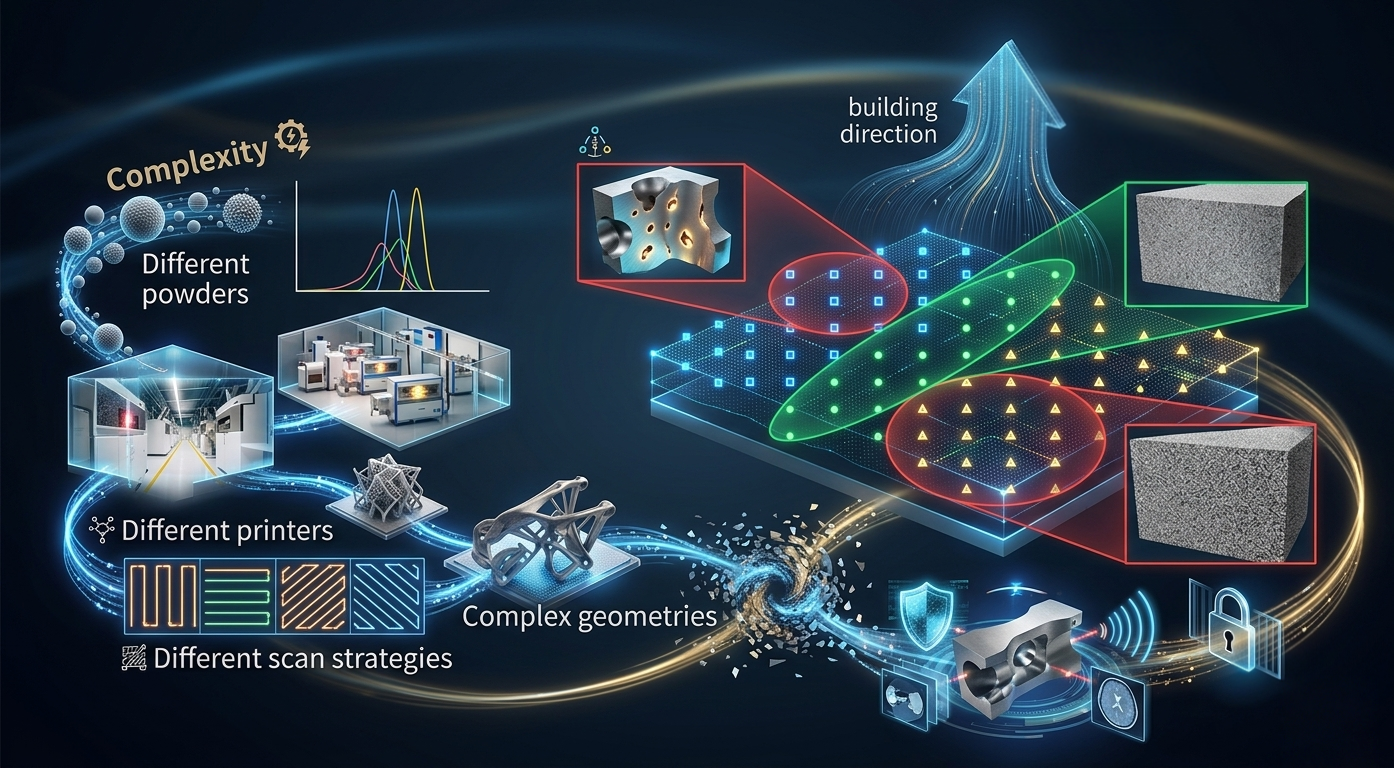
Image: The Complex and Digitally-Native Characteristics of Additive Manufacturing Enable Digital Twin-Assisted Qualification
Driving International Collaboration Frameworks for Digital Qualification
Internationally, model-based qualification remains at the intersection of standards development and technical validation. The Singapore Standards Council is actively advancing an international collaboration framework in this space. Recently, a new project was launched under the project name of Method for digital qualification of metal 3D printing components using digital twins. The Technical Reference (TR) for this digital qualification method was initiated by the Singapore Standards Council, with Dr. Guglielmo Vastola serving as Convenor. Participating organizations span the full chain from regulatory oversight to industrial application:
Regulatory and public sector agencies include the Land Transport Authority (LTA), Maritime and Port Authority of Singapore (MPA), and Civil Aviation Authority of Singapore (CAAS), representing the regulatory demand for additive manufacturing component qualification in critical infrastructure sectors such as rail transit, marine shipping, and aviation.
International certification and inspection bodies form the core technical compliance review capacity, covering the American Bureau of Shipping (ABS), ASTM, DNV, DNV GL, Bureau Veritas, and TÜV SÜD PSB. Their participation means the TR framework must be compatible with existing regulatory interfaces of mainstream international certification systems from the drafting stage onward.
Industrial end-users include ST Engineering, Alstom, SBS Trains, Tru-Marine, and ELH Tech, involving specific application scenarios in aerospace maintenance, rail transit, marine propulsion, and defense equipment. These stakeholders provide first-hand engineering validation requirements for the sufficiency of physical quantities and confidence interval thresholds within the standard.
Additive manufacturing ecosystem and research institutions include local AM service providers contributing process practice feedback, as well as ASTAR IHPC (Institute of High Performance Computing), ASTAR IMRC (Institute of Materials Research and Engineering), and A*STAR SIMTech (Singapore Institute of Manufacturing Technology), providing support in high-performance computing, underlying materials science, and process research.
This participation structure indicates that the TR is not an internal specification of a single technology enterprise, but rather an attempt to establish a baseline consensus among regulators, certification bodies, end-users, and research institutions regarding digital twin-assisted qualification. A common constraint across all participants is that the standard must simultaneously satisfy Singapore’s domestic safety regulatory requirements for critical infrastructure and maintain technical compatibility for international adoption.
Under this project, the Singapore Standards Council’s TR framework identifies three focal areas:
Delineation of Digital Twin Software Architecture What software architecture qualifies as legally admissible for certification? Most current market offerings labeled as "digital twins" remain at the level of visualization or static simulation, lacking dynamic feedback capabilities synchronized layer-by-layer with the physical manufacturing process.
Identification of Physical Quantity Sufficiency What inputs are required to adequately cover predictions of microstructure, porosity, residual stress, mechanical properties, and other outputs? The TR framework must establish a complete physical evidence chain from process parameters to end-part performance, rather than relying on statistical inference from sampled testing.
Quantification of Acceptable Confidence Intervals What level of error between model predictions and experimental testing is acceptable to certification bodies? This threshold is not yet harmonized across industries—aviation, energy, and medical sectors each hold different tolerances—and resolving this discrepancy is a core task of the TR framework.
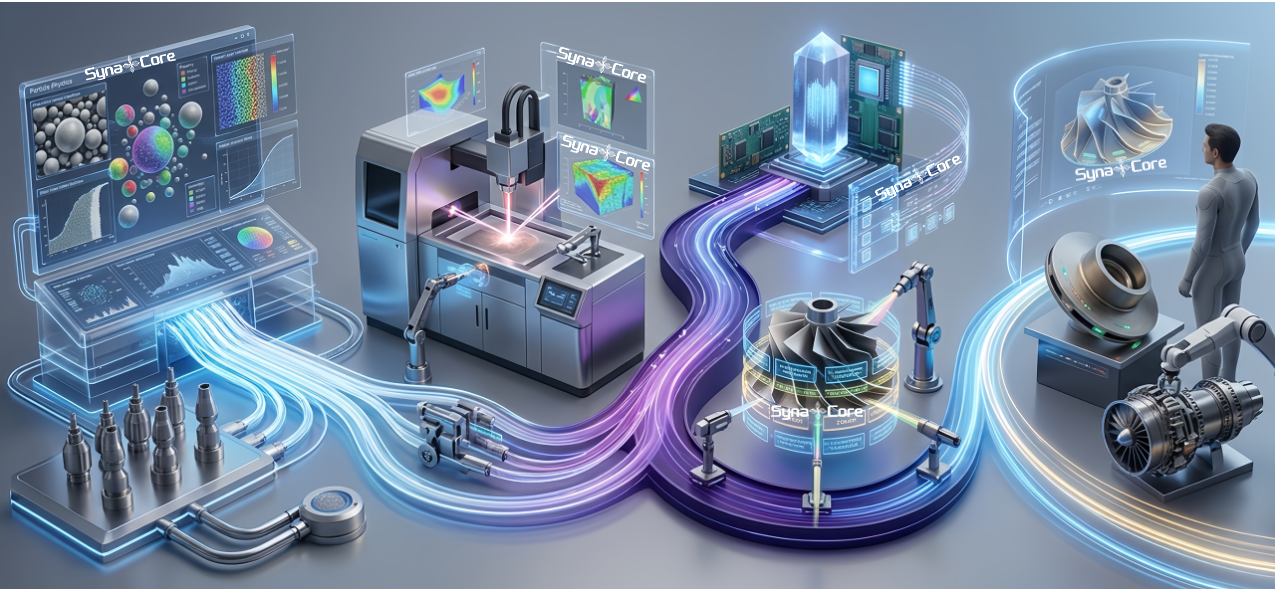
Image: Establishing a Baseline Consensus on Digital Twin-Assisted Qualification
SynaCore's Response: First-Principles and Self-Evolving Architecture
The solver kernel of SynaCore AM-DT was developed by A*STAR's Institute of High Performance Computing (IHPC). It embeds fundamental physical laws—conservation of energy, momentum, and mass—into the computational framework, covering Newtonian mechanics, Maxwell's equations, the Boltzmann equation, and the laws of thermodynamics. Predictions generated by this physics-based solver theoretically possess extrapolation capabilities across different materials and process parameters, distinguishing them from pure data-driven black-box fitting.
Objective differences exist among equipment from different manufacturers in laser power distribution, scanning strategies, chamber thermal environments, and material batches.
How does the same software accommodate these differences? SynaCore's approach is the concept of "Digital DNA." When the same first-principles architecture runs on different machines, it calibrates distinct model parameter combinations based on respective sensor data and process feedback. These parameter combinations constitute a unique "Digital DNA" for that specific machine. This means the digital twin's predictive capability is not a universal template, but a specialized asset that gradually differentiates according to specific equipment and usage history.
The formation process of this specialized asset—the self-evolution mechanism—occurs during every print cycle as the software adapts to the equipment. The system backtracks and compares actual sensor data (melt pool temperature, acoustic emission signals, etc.) against predicted results, quantifies prediction errors, and updates model parameters. As the number of builds increases, the model's prediction accuracy for that specific machine and material batch gradually improves. This is a model-data symbiotic mechanism, and a key characteristic distinguishing SynaCore from traditional one-off simulation software.
Three-Layer Architecture and Digital Qualification Development Path
SynaCore AM-DT organizes these capabilities through a three-layer architecture. The first layer is the Offline-Level Digital Twin (Offline-Level DT), used for high-fidelity simulation and process parameter optimization. It predicts part-scale thermal history through thermal simulation, realizes predictions of porosity, precipitates, microstructure, and mechanical properties by combining sensor characteristics, and achieves layer-by-layer adaptive adjustment of scanning strategies through its Adaptive ToolPath. This layer directly addresses the challenge of physical quantity sufficiency identification in standards development.
The second layer is the System-Level Digital Twin (System-Level DT), focusing on process chain management and data integration for Instance-Qualified Components. It consolidates data from design, material selection, process planning, production, and post-processing stages into a unified platform, building auditable manufacturing equipment networks and data storage systems to provide certification bodies with traceable data linkages.
The third layer is the Product-Level Digital Twin (Product-Level DT), focusing on full lifecycle management. It tracks product performance degradation during service by continuously updating the virtual model with data collected from the physical product, for use in predictive maintenance requirement assessment. This layer remains in the deployment phase, primarily targeting high-value, long-life components such as aerospace structural parts and energy equipment.
Regarding the practical boundaries of pre-qualification, SynaCore AM-DT's current capabilities are concentrated primarily on design optimization and risk screening. Before a part is physically printed, the system can predict microstructure evolution, residual stress distribution, and heat treatment response based on first-principles physics simulation, and generate adaptive process parameter recommendations to reduce the number of physical trial-and-error iterations.
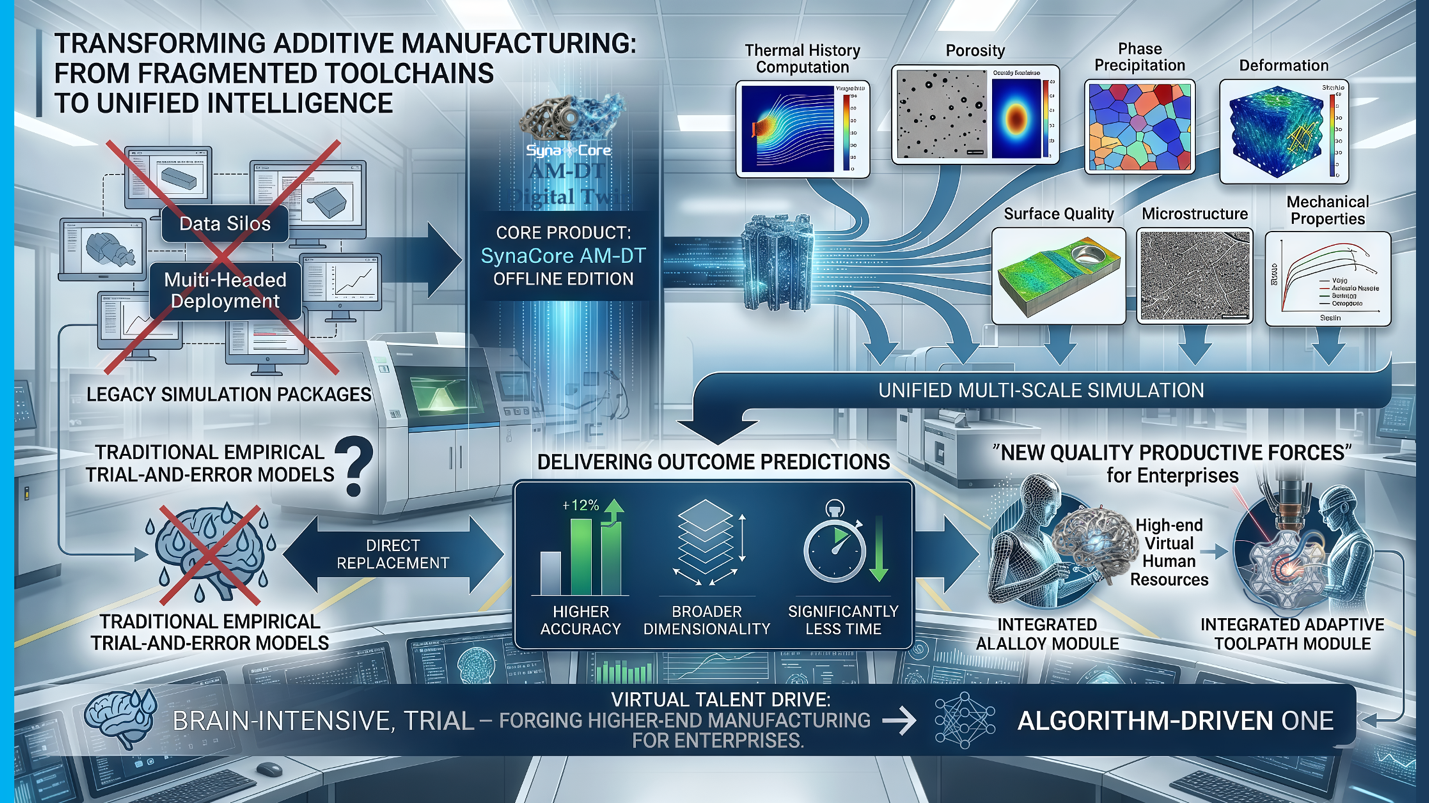
Image: SynaCore AM-DT Digital Twin: Multi-Scale Simulation Reconstructing the Performance Prediction Paradigm
Internationally, institutions such as NIST, NASA, and DNV GL have in recent years converged on model-based qualification. The immediate driver is that traditional qualification models have hit hard boundaries in additive manufacturing. AM involves multi-physics coupling, cross-scale phenomena, and highly nonlinear processes; traditional "empirical trial-and-error plus statistical inference" qualification cycles often span several years, and in extreme cases exceed fifteen years. For large complex components such as marine propellers or spacecraft load-bearing structures, full-scale physical testing has approached economic and feasibility limits. The engagement of these institutions is not an active "embrace of new technology," but a pragmatic choice driven by real-world constraints.
In terms of progress, related work remains in the early stages of standards establishment. NIST is developing metrology guidelines for model-based validation and qualification, with a core task of establishing statistical equivalence between digital twin predictions and physical test results. DNV GL has publicly stated that the industry needs alternative approaches based on validated models, probabilistic methods, and part similarity. NASA has funded related technology development for pre-qualification research on rocket and spacecraft additive components.
SynaCore’s incremental path follows a similar logic: first, accumulate historical evidence of prediction accuracy through parallel comparison of virtual simulation against physical validation; then, gradually advance conditional regulatory acceptance of model-based conclusions in specific scenarios. This is a process requiring data accumulation and time for validation—not an overnight replacement.